
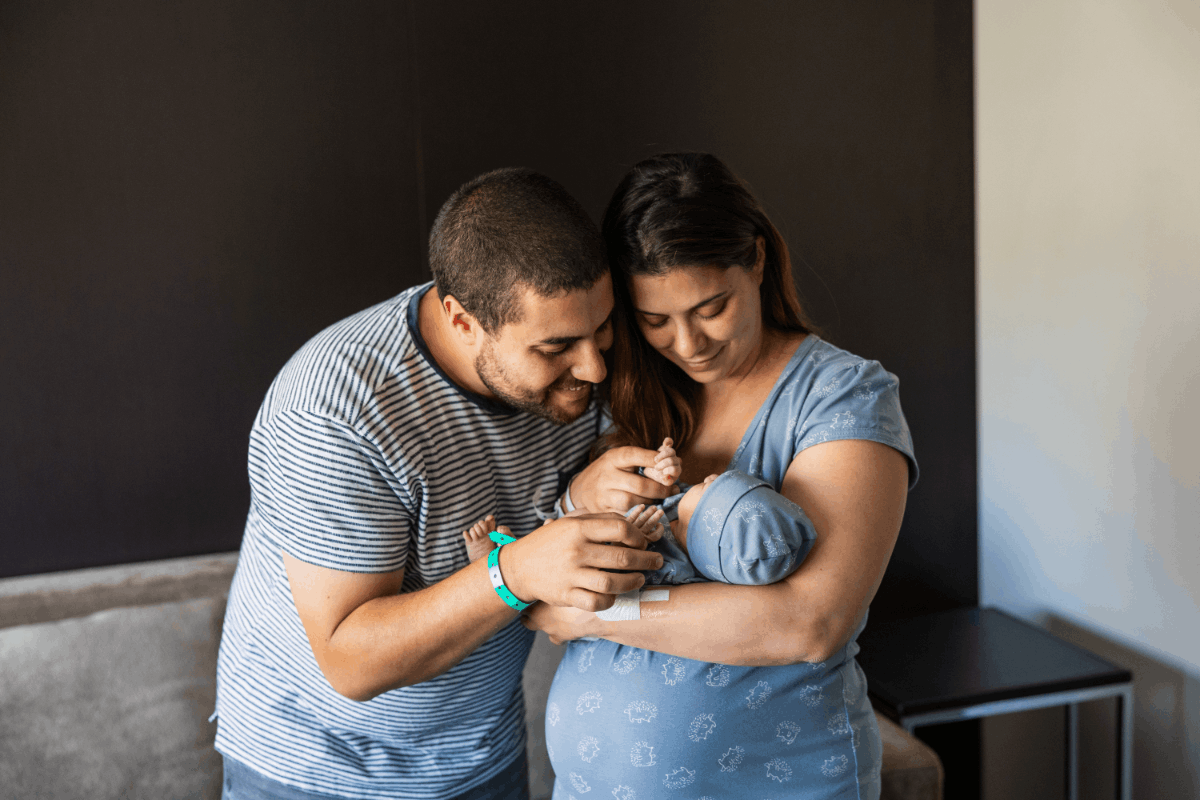
Bringing home a new baby is supposed to be one of the happiest times in your life. So when you find yourself crying for no reason, snapping at the people you love, or feeling strangely disconnected from your baby, it can be confusing and frightening. It can be even harder when your partner does not seem to get it.
If you have been searching for how to explain postpartum depression to my husband, you are not failing, and you are not alone. Postpartum depression is a real, common, and treatable medical condition.
At Robles Ranch in Paso Robles, California, we understand how isolating it feels when the people closest to you do not understand what you are going through. Compassionate, professional care helps. To learn how our team supports adults through this condition, explore our postpartum depression treatment program.
At A Glance
- Postpartum depression is a medical condition, not a mood or a personality change. It affects about 1 in 8 women who have recently given birth.
- Mood swings are a symptom, not a message about how you feel toward your partner or your baby.
- Partners often miss it because depression is invisible, because they are exhausted too, and because nobody prepared them for this.
- Specific asks work better than general ones. “Take the 2 a.m. feeding on weekends” lands where “I need more help” does not.
- It is treatable. Therapy, medication, and structured care all work, and most people get better.
What Is Postpartum Depression?
Postpartum depression, often shortened to PPD, is a form of depression that can occur after having a baby. It is more than feeling tired or overwhelmed. It is a mood disorder that affects how you feel, think, and function day to day.
Many new parents experience what is often called the “baby blues” in the first days after birth — worry, sadness, and tiredness. The CDC explains that baby blues symptoms typically resolve on their own within a few days.
Postpartum depression is different. The same CDC guidance notes that postpartum depression symptoms are more intense and last longer than baby blues. They do not simply fade after a week or two. They can linger, deepen, and interfere with your ability to care for yourself and your baby.
This is not a character flaw. It is not something you caused. Postpartum depression is a medical condition, and it responds to treatment.
Baby Blues, Postpartum Depression, or Something Else?
One of the fastest ways to help a partner understand is to show them where you actually are on this spectrum. These conditions are distinct, and they call for different responses.
| Condition | Typical timing | What it looks like | What it calls for |
| Baby blues | First few days to two weeks after birth | Tearfulness, worry, irritability, fatigue that comes and goes | Rest, support, monitoring; usually resolves on its own |
| Postpartum depression | Can begin during pregnancy or any time in the first year | Persistent low mood, guilt, loss of interest, trouble bonding, symptoms lasting more than two weeks | Evaluation and treatment by a health care provider |
| Postpartum anxiety or OCD | Any time in the first year | Racing thoughts, constant fear something will happen to the baby, intrusive images, inability to rest even when the baby sleeps | Evaluation and treatment; often occurs alongside PPD |
| Postpartum psychosis | Usually within the first two weeks | Confusion, paranoia, hallucinations, delusions, dramatic mood shifts, feeling detached from reality | Medical emergency — seek help immediately, call 911 |
Postpartum psychosis is uncommon, but it is a genuine emergency and it is the reason it matters to name what you are experiencing out loud rather than waiting it out alone.
Postpartum Depression Is More Common Than Most People Realize
One reason it is hard to explain postpartum depression to your husband is that most people have no idea how widespread it is. Putting real numbers to it can help both of you understand this is a health condition, not an overreaction.
CDC research shows that about 1 in 8 women with a recent live birth reported symptoms of postpartum depression. That is millions of families every year. Depression is common among women more broadly as well — CDC data indicate roughly 1 in 10 women of reproductive age in the United States reported symptoms suggesting a recent episode of major depression.
Here is a detail worth sharing with your partner: they may be struggling too. Research on paternal perinatal mental health consistently finds that roughly 1 in 10 fathers experience postpartum depression or anxiety in the year after a baby arrives. A partner who seems distant, short-tempered, or checked out is not necessarily indifferent to what you are going through. Sometimes two people are struggling at once and neither has said so.
Signs and Symptoms of Postpartum Depression
Postpartum depression looks different from one person to the next. Some people notice a few symptoms; others experience many. Recognizing the signs helps you put words to what you have been feeling.
- Persistent low mood: a lasting sad, anxious, or empty feeling that does not lift.
- Loss of interest: no longer enjoying hobbies or activities that used to matter to you.
- Changes in sleep: trouble sleeping even when the baby sleeps, or sleeping much more than usual.
- Changes in appetite: eating far more or far less than normal, or noticeable weight changes.
- Fatigue: a deep tiredness or drop in energy that rest does not fix.
- Irritability: feeling unusually angry, on edge, or easily frustrated.
- Trouble concentrating: difficulty focusing, remembering things, or making even small decisions.
- Feelings of guilt or worthlessness: believing you are not a good parent, or that you are failing.
- Difficulty bonding: feeling distant from your baby or struggling to form an emotional connection.
These symptoms are drawn from guidance by the National Institute of Mental Health, which explains that not everyone who is depressed shows all of them, and that these symptoms interfere with daily functioning. If any of this sounds familiar, it is worth talking to a health care provider. NIMH advises that if your symptoms persist or do not go away, you should talk to a provider.
A Note About Mood Swings
Mood swings are one of the most misunderstood parts of postpartum depression. One moment you might feel numb. The next, tearful or furious. To a partner who does not understand what is happening, this can look unpredictable or out of character — and it is easy for them to take it personally.
It helps to say plainly that these shifts are a symptom of the condition, not a verdict on them or on the baby. The anger is real, but it is not information about your relationship.
Why Your Partner May Not Understand About Postpartum Depression
If your partner is not getting it, that does not automatically mean they do not care. A few things are usually going on at once:
- Depression is invisible. There is no cast, no fever, no test result they can look at. If you are still getting through the day, they may assume you are fine.
- They are exhausted too. Sleep deprivation narrows everyone’s capacity for empathy. It is hard to look outward when you are running on four hours.
- Nobody told them this happens. Prenatal classes cover contractions and car seats. Very few cover maternal mental health.
- They feel helpless. Some partners retreat not because they do not care, but because they cannot fix it and do not know what else to offer.
- They may be struggling themselves. See the 1 in 10 figure above.
- The cultural script gets in the way. “This is supposed to be the happiest time of your life” makes it hard for both of you to admit it is not.
Why It Can Be So Hard to Bring It Up
If you have struggled to start this conversation, there is a reason. Depression itself makes communication harder. Shame and guilt often travel with postpartum depression, and those feelings keep people silent.
This is common. Research summarized in StatPearls notes that up to 50% of perinatal depression cases go undiagnosed, partly because of stigma and patients’ reluctance to disclose symptoms. Many people stay quiet out of fear of being judged, dismissed, or seen as an unfit parent.
Naming that fear can actually help. You might say: “This is hard for me to say, and part of the reason is that I feel ashamed. But I need you to know what is going on.”
How to Explain Postpartum Depression to Your Husband
There is no perfect script, and every relationship is different. But a few approaches make the conversation more manageable and help your partner actually hear you.
- Let go of blame first. Remind yourself, and your partner, that postpartum depression is not your fault and not theirs. It is a medical condition that deserves compassion, not guilt.
- Choose a calm moment. Find a quiet time, ideally when the baby is settled or someone you trust can watch the baby for a little while. Not mid-argument, and not at 3 a.m.
- Name what you have been feeling. Describe your symptoms in plain terms. Explain that this is more than the baby blues and that it has not gone away on its own.
- Share the facts. Sometimes hearing “1 in 8 new mothers experience this” is the thing that makes it click.
- Be specific about what you need. “I need more help” is easy to nod at and forget. “I need you to take the baby from 7 to 9 every night so I can sleep” is something a person can actually do.
- Invite them into treatment. If you are already seeing a provider, ask whether your partner can join a session. If you are not yet, consider calling your OB/GYN together.
- Give them something to read. Sending an article often works better than a speech, because it lets them absorb it without feeling put on the spot.
The goal is not to have every answer. It is to open the door so you are facing this as a team.
Words You Can Borrow
If the conversation feels impossible to start, take these and make them yours.
| What you are experiencing | What you might say |
| Mood swings that seem to come from nowhere | “When I snap at you, it is not about you. My moods are swinging in a way I cannot control right now, and that is one of the symptoms.” |
| Trouble bonding with the baby | “I love our baby and I also feel numb around her. Those two things are both true, and it scares me.” |
| Feeling dismissed | “When you tell me every new mom feels this way, I hear that I should stop talking about it. What I need is for you to believe me.” |
| Needing practical help | “I need four uninterrupted hours of sleep. Can you take the baby from 9 to 1 tonight?” |
| Wanting them at an appointment | “I have an appointment Thursday. It would help me if you came, because I want you to hear this from someone other than me.” |
| Naming the shame | “Part of why I have not told you is that I feel like a failure. I am telling you anyway because I need help.” |
For Partners: What Actually Helps
If you are the partner reading this, here is the short version. You do not need to fix it. You need to believe her and stay close.
- Take things off her plate without being asked. Not “let me know if you need anything.” Just handle the night feeding, the dishes, the pediatrician call.
- Protect her sleep. Sleep deprivation makes every symptom worse. Uninterrupted blocks of sleep are one of the most concrete forms of help you can give.
- Believe her. The most damaging response is minimizing. She is not being dramatic.
- Make the appointment. Depression makes phone calls feel enormous. Offer to call the provider and to drive her there.
- Do not take the mood swings personally. They are symptoms of an illness, not statements about you.
- Watch for warning signs. If she mentions thoughts of harming herself or the baby, or seems confused or detached from reality, act immediately. See the crisis section below.
- Check on yourself too. About 1 in 10 partners develop postpartum depression. You are allowed to need support.
A few phrases to skip: “Everyone goes through this.” “You have so much to be grateful for.” “Just try to enjoy it.” “Have you tried getting out more?” Each one, however kindly meant, tells her she is wrong about her own experience.
Postpartum Depression Is Treatable
The most reassuring thing you can share with your partner is this: postpartum depression gets better with help. The CDC emphasizes that depression is treatable and that most people get better with treatment.
Care usually starts with a screening — often a brief questionnaire such as the Edinburgh Postnatal Depression Scale — followed by a conversation about options:
- Talk therapy. NIMH notes that evidence-based therapies for perinatal depression include cognitive behavioral therapy and interpersonal therapy.
- Couples and family therapy. When a partner does not understand, having a clinician in the room can move the conversation further in one hour than months of trying alone.
- Medication. Antidepressants are commonly used, and there are now medications developed specifically for postpartum depression, including an oral option approved by the FDA in 2023. A psychiatric provider can weigh options with you, including any considerations around breastfeeding.
- Structured programs. When symptoms are severe or outpatient care has not been enough, higher levels of care exist — intensive outpatient, partial hospitalization, and residential treatment.
Recovery takes time, and progress is rarely a straight line. But with the right care and support, feeling like yourself again is possible.
When to Reach Out for Help Right Away
Most of the time, postpartum depression can be addressed through your provider on a normal schedule. Some situations call for immediate support.
Seek help right away if you or your partner notice thoughts of harming yourself or the baby, confusion or disorientation, paranoia, hearing or seeing things others do not, or a sense of being detached from reality. These can be signs of postpartum psychosis, which is a medical emergency.
- 988 Suicide and Crisis Lifeline — call or text 988, any time, 24/7.
- National Maternal Mental Health Hotline — call or text 1-833-TLC-MAMA (1-833-852-6262) for free, confidential support from trained counselors, 24/7.
- Postpartum Support International HelpLine — call or text 1-800-944-4773 for information and referrals.
- In a medical emergency, call 911.
Reaching out in these moments is not a sign of weakness. It is one of the bravest and most protective things a parent can do.
Frequently Asked Questions
How do I explain postpartum depression to my husband?
Pick a calm moment, describe your specific symptoms in plain language, explain that this is a medical condition rather than the baby blues, share how common it is, and ask for one or two concrete forms of help. Offering an article to read and inviting him to an appointment often works better than trying to explain everything in a single conversation.
Is postpartum depression the same as the baby blues?
No. Baby blues affects many new parents in the first days after birth and usually resolves on its own within about two weeks. Postpartum depression is more intense, lasts longer, and interferes with daily functioning. It requires evaluation and treatment.
Are mood swings a symptom of postpartum depression?
Yes. Irritability and rapid shifts between numbness, sadness, and anger are common symptoms. They are part of the condition, not a reflection of how you feel about your partner or your baby.
What if my partner thinks I am overreacting?
Share the data — about 1 in 8 women with a recent live birth report symptoms of postpartum depression. Ask him to come to an appointment so he hears it from a clinician. If he continues to dismiss it, seek support from your OB/GYN, a therapist, or a maternal mental health hotline; you do not need his agreement to get care.
Can men get postpartum depression?
Yes. Research consistently finds that roughly 1 in 10 fathers experience postpartum depression or anxiety in the year after a baby is born. A partner who seems distant or irritable may be struggling as well.
How long does postpartum depression last?
It varies. Without treatment, symptoms can persist for months or longer. With treatment, most people begin to improve within weeks, though recovery is rarely a straight line.
Can postpartum depression start months after birth?
Yes. It can begin during pregnancy or at any point during the first year after birth, including after weaning or a return to work. A later onset does not make it any less real or less treatable.
What is the difference between postpartum depression and postpartum psychosis?
Postpartum psychosis is a separate and much less common condition involving confusion, paranoia, hallucinations, or delusions, usually appearing within the first two weeks after birth. It is a medical emergency requiring immediate care, while postpartum depression is treated through outpatient or structured programs.
Find Mental Health Treatment for Postpartum Depression in California
You do not have to navigate postpartum depression alone, and neither does your partner. Learning to talk about it openly is a meaningful first step, and professional support can change things for your whole family.
At Robles Ranch in Paso Robles, our clinical team provides compassionate, personalized treatment for adults facing depression and other mental health conditions, in a quiet Central Coast setting. We serve individuals and families from across California, and we will help you figure out which level of care fits your life right now.
Call us now at 866-840-3841, or verify your insurance now to take the next step toward feeling like yourself again.