
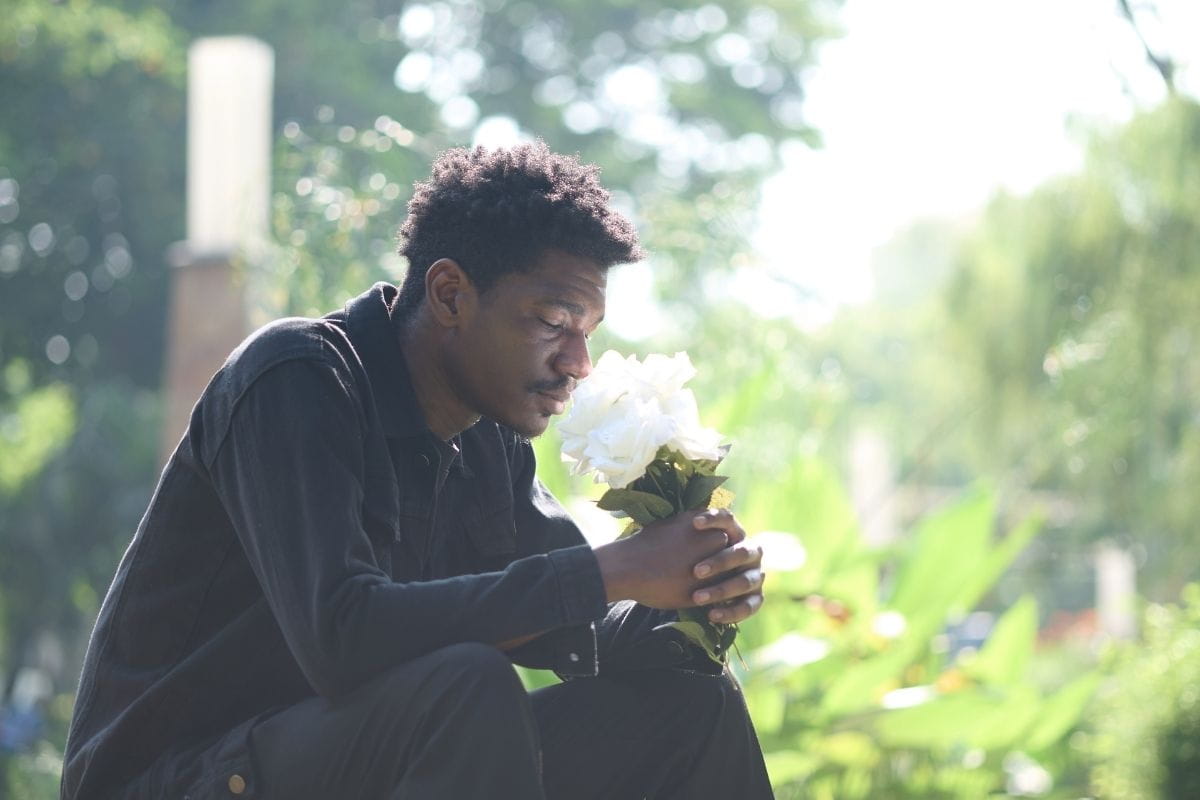
n the immediate aftermath of a significant loss, grief can be overwhelming. You may feel like your life has been irreparably damaged, and wonder how you can possibly go on. How long will it take before you start to emerge from this emotional darkness? How long does grief last?
At Robles Ranch, we offer compassionate and respectful care for people who have been unable to get through the devastation of prolonged grief. To learn more or to schedule a free assessment, contact us today.
Learn more about mental health treatment in Paso Robles County or verify your insurance now.
What Is Grief?
Everybody knows what grief is, right? Isn’t it just the deep sadness you experience when someone that you care about dies?
Not exactly. And before we can answer the question of how long does grief last, we first have to clarify what grief actually is.
First, grief isn’t limited to sadness. The emotional anguish that people experience when they are grieving can be accompanied by a range of other difficult physical, psychological, and behavioral effects.
According to the American Psychological Association (APA), the components of grief can include:
- Physiological distress
- Separation anxiety
- Confusion
- Yearning
- Obsessive dwelling on the past
- Fear about the future
In severe cases, the APA reports, grief can also involve immune system dysfunction, self-neglect, and suicidal ideation.
Also, grief doesn’t only occur in the aftermath of a loved one’s death.
As described by the Hospice Foundation of American (HFA), other losses that can trigger grief include:
- The loss of a companion animal
- The end of a relationship
- Job loss
- The loss of your independence due to injury or illness
In the simplest terms, grief is a reaction to loss. Unfortunately, grief is far from a simple concept. The HFA compares grief to a fingerprint, noting that it can be different for each person who experiences it.
How Long Does Grief Last?
So now that we understand grief as the sum of a person’s physical, emotional, and behavioral responses to a loss, we can turn our attention back to the question in the title of today’s post: How long does grief last?
The truth is that there’s no standard maximum or minimum time frame for grief.
People who are grieving can experience a variety of symptoms, and these symptoms can vary in both intensity and duration.
Typically, symptoms associated with grief will fade over time. Some may disappear completely, but others will not. Ideally, the symptoms that remain will transform from sources of profound distress to manageable thoughts and feelings.
Nora McInerny, a renowned speaker and author on the topic of grief, has said that we shouldn’t expect the impact of significant losses to every fully end.
“We don’t move on from grief,” McInerny said in her 2017 TED Talk, “we move forward with it.”
Does Grief Occur in Stages?
In her 1969 bestseller, On Death and Dying, psychiatrist Elizabeth Kübler-Ross described grief as occurring in five stages:
- Anger
- Denial
- Bargaining
- Depression
- Acceptance
The enduring popularity of this book has led to the widespread belief that moving through the stages is the “correct” way to grieve.
However, even though On Death and Dying remains an influential book, many experts have challenged the accuracy and value of Kübler-Ross’s stages. A February 2017 article in Omega – Journal of Death and Dying highlighted several opposing viewpoints.
“Major concerns [about the five stage model] include the absence of sound empirical evidence, conceptual clarity, or explanatory potential,” that article noted. “Most disturbingly, the expectation that bereaved persons will, even should, go through stages of grieving can be harmful to those who do not.”
In other words, grief doesn’t follow a predictable path. Some people may go through the five stages, while others won’t. And those who do may not experience them in a linear fashion. This means that you cannot chart a person’s progression through grief by determining which stage they are in.
Is Grief Harmful to Your Mental Health?
Though it can be quite painful, grief is both normal and healthy. But particularly severe or enduring grief can have a negative impact on a person’s mental health, and may lead to a diagnosable disorder.
Unrelenting grief can contribute to mental illnesses such as:
- Generalized anxiety disorder (GAD)
- Panic disorder
- Major depressive disorder
- Persistent depressive disorder
- Posttraumatic stress disorder (PTSD)
Also, the most recent revision of the Diagnostic and Statistical Manual of Mental Disorders, which was published in 2022, included a new condition called prolonged grief disorder (PGD).
According to the DSM-5-TR, the eight symptoms of PGD are:
- Identity disruption, such as feeling like part of you has died
- Marked sense of disbelief about the death
- Avoidance of reminders that the person is dead
- Anger, bitterness, sorrow, and other intense emotional pain related to the death
- Difficulty with reintegration, such as having problems interacting with friends, pursuing your interests or planning for the future
- Emotional numbness
- Feeling that life is meaningless without the deceased person
- Intense loneliness or sense of detachment from others
All of these symptoms are common in the immediate aftermath of a death. For this reason, a person cannot be diagnosed with PGD unless they are still experiencing symptoms more than a year after the death of their loved one.
Find Help for Prolonged Grief in Paso Robles, CA
Robles Ranch is a trusted source of personalized care for adults whose lives have been disrupted by prolonged grief, other mental health concerns, and co-occurring substance use disorders.
Our treatment center in Paso Robles, CA is a safe and highly supportive environment where clients work in active collaboration with a team of experienced and compassionate professionals. To best meet each person’s unique needs, we offer three levels of care: residential treatment, a partial hospitalization program (PHP), and an intensive outpatient program (IOP).
To learn more call 805-635-0668 or verify your insurance now.