
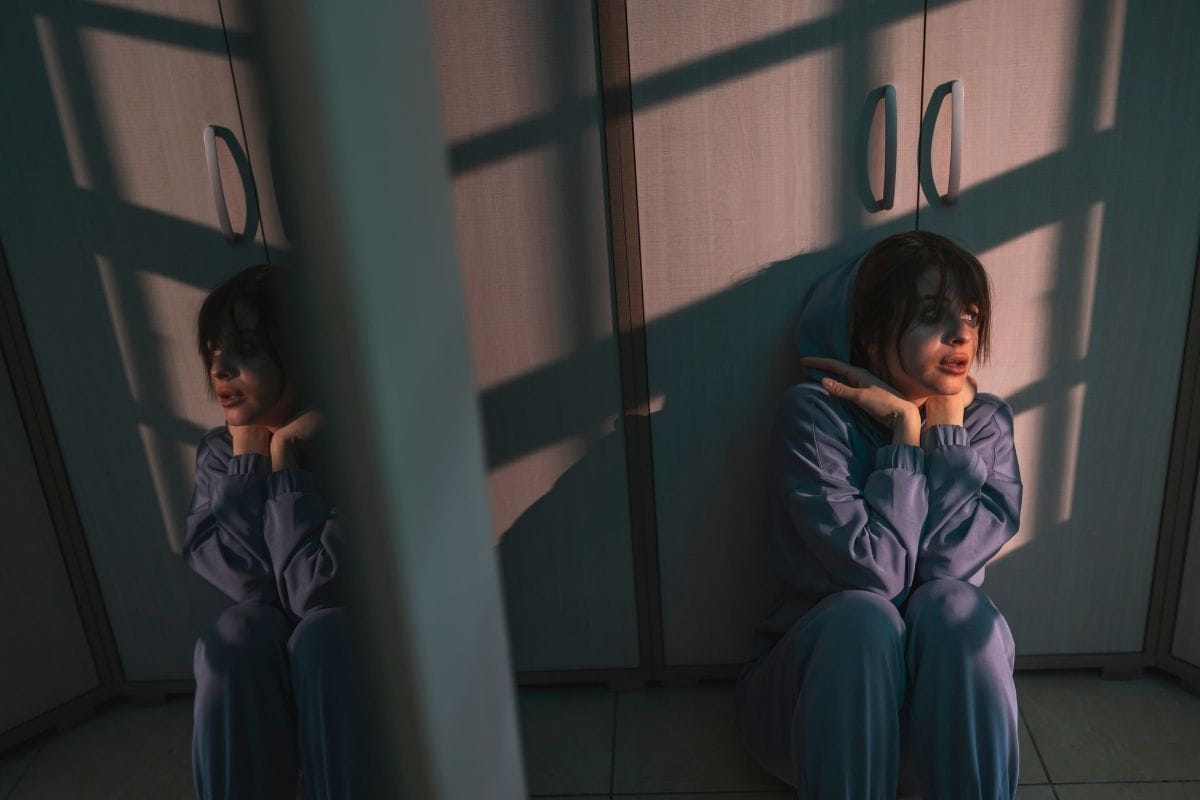
From the outside, it may appear that someone with schizophrenia is detached from reality and uninterested in interacting with others. Is this an accurate assessment? What does schizophrenia feel like?
At Robles Ranch, our team of experts is committed to providing compassionate care in a respectful environment for adults with schizophrenia and other psychotic disorders. To learn more or to schedule a free assessment, contact us today.
Learn more about schizophrenia treatment in Paso Robles County or verify your insurance now.
What Is Schizophrenia?
Schizophrenia is a complex, oft-misunderstood mental health condition that impairs a person’s ability to perceive their environment and interact with others.
Symptoms
People with schizophrenia can experience five types of symptoms:
- Hallucinations
- Delusions
- Disorganized speech
- Grossly disorganized or catatonic behaviors
- Negative symptoms
According to the fifth edition of the Diagnostic and Statistical Manual of Mental Disorders (DSM-5), a person must have at least two of these symptoms to be diagnosed with schizophrenia. One of their symptoms must be either hallucinations, delusions, or disorganized speech.
Prevalence
Schizophrenia is a relatively uncommon disorder, affecting less than 1% of the population. But considering how many people currently occupy the planet, this low percentage still represents millions of lives.
The estimated prevalence of schizophrenia in the U.S. and throughout the world:
- United States: The National Institute of Mental Health (NIMH) estimates that 0.25%-0.64% of people in the U.S. have schizophrenia or a similar condition. The U.S. is currently home to about 270 million adults, which works out to 675,000-1.76 million cases.
- Global: According to the World Health Organization (WHO), schizophrenia affects about 0.43% of the global adult population. This means more than 20 million people ages 18 and above are likely living with this condition.
What Does Schizophrenia Feel Like?
The answer to the question of what does schizophrenia feel like can vary considerably from one person to the next.
Factors that can influence what schizophrenia feels like include:
- Which types of symptoms a person has
- How severe these symptoms have become
- If the individual is receiving therapy to help manage their symptoms
- If they are taking mood stabilizers, anti-psychotics, or other medication
- If they have any co-occurring mental or behavioral health disorders
A person’s experience with schizophrenia can also be affected by the quality of their personal support network and the level of stigma, victimization, or other hostilities they are exposed to.
With so many variables to consider, there’s no way to describe what it feels like for everyone who has schizophrenia. But viewing the condition solely from the perspective of the five symptom types, we can get a general idea of what it might be like to live with this disorder.
Hallucinations
Hallucinations occur when a person’s senses perceive a stimulus that does not originate from an actual external source. Auditory and visual are the most common types, but some people with schizophrenia may also have hallucinations that involve their sense of smell, taste, and touch.
Examples of what it feels like to have hallucinations include:
- Seeing colors or light patterns that no one else sees
- Thinking that there is a person, animal, or object near you when nothing is actually there
- Hearing a voice that commands you to act in a dangerous or otherwise inappropriate way
- Feeling like bugs are crawling over or beneath your skin
- Having a persistent metallic or chemical taste in your mouth
Delusions
Delusions are beliefs that people cling to even if they have no basis in reality or can be easily disproven.
Having delusions can feel like:
- Thinking that news articles or TV shows contain coded messages that only you can understand
- Believing that you are in a relationship with a famous person who you’ve never actually met
- Being convinced that someone is stalking you or tracking your movements, even though no one is
- Feeling that you are responsible for a loved one’s illness because of something you thought or did
- Interpreting a minor stomach ache as evidence that you have an incurable fatal disease
Disorganized Speech
This symptom type is characterized by a diminished capacity for organizing your thoughts and expressing them in a logical, understandable manner.
Examples of disorganized speech include:
- Responding to questions with rambling, disjointed statements
- Selecting words because of their sound or rhyme instead of their meaning
- Using made-up words that have no meaning to anyone but you
- Repeating words and phrases that others have said
- Speaking in manner that is simply incomprehensible to others
Disorganized speech can prevent you from engaging in meaningful conversations, sharing your opinions and insights, or even asking for help. Being cut off from communicating in these ways may contribute to feelings of frustration and isolation.
Grossly Disorganized or Catatonic Behavior
A September 2023 Current Psychiatry Reports article noted that one of the challenges posed by disorganized behavior and speech is that these symptoms often persist even when a person is in a period of remission from acute psychotic symptoms.
The authors of that article also reported that these symptoms can be particularly difficult to treat.
Examples of grossly disorganized or catatonic behavior include:
- Acting in an infantile or child-like manner
- Holding your body in odd postures
- Moving in strange ways that have no apparent purpose
- Talking to yourself
- Lashing out in unprovoked anger
These types of behaviors can cause others to avoid or ostracize you. They may even provoke aggressive or violent responses, which can put you in physical danger.
Negative Symptoms
An August 2023 study in the journal Schizophrenia Research reported that negative symptoms are a core feature of schizophrenia, and are often the earliest indicators that a person has the disorder.
If you develop negative symptoms you may:
- Have a flat, monotone voice
- Speak minimally or not at all
- Exhibit little to no facial expressiveness
- Display little to no interest in interacting with others
- Find it difficult or impossible to experience happiness or pleasure
It’s not hard to see how negative symptoms can be linked to feelings of depression or emotional numbness. They may also contribute to social withdrawal and isolation.
Find Treatment for Schizophrenia in Southern California
Robles Ranch is a safe and welcoming place where adults with schizophrenia and other complex mental health needs can receive a full continuum of personalized services.
Treatment options at our center in Paso Robles, CA, include residential treatment, a partial hospitalization program (PHP), and an intensive outpatient program (IOP).
To learn more call 805-635-0668 or verify your insurance now.